

This article may contain affiliate links. We may earn a commission if you book or purchase through them, at no extra cost to you.
Ephesus is one of the most important ancient sites in Turkey, but a good visit is not only about arriving at the gate and walking through the ruins.
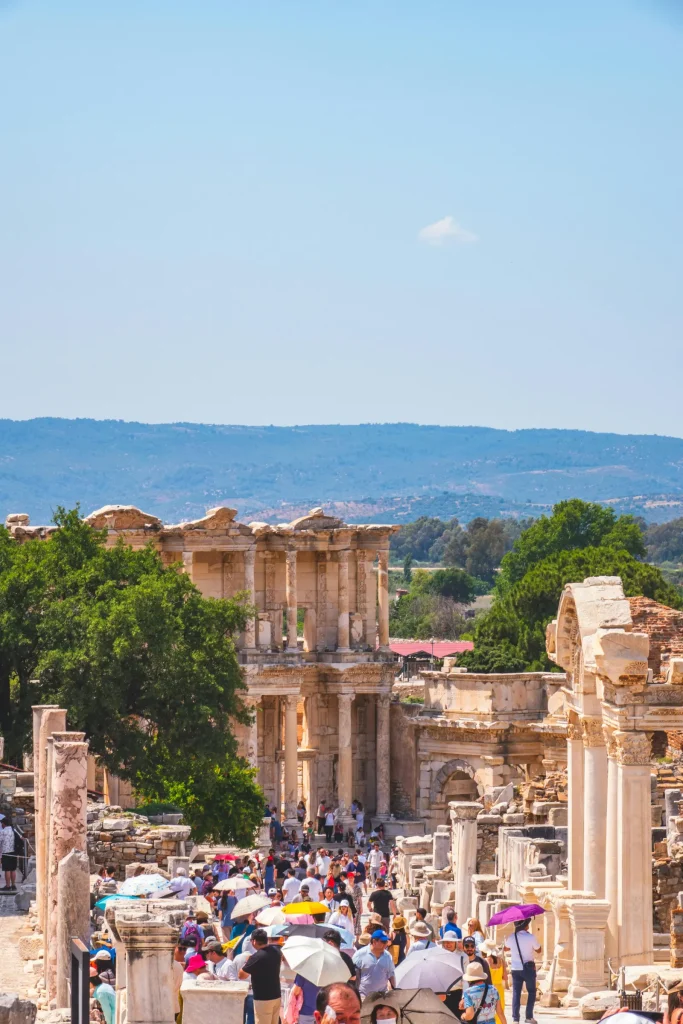
The ancient city is the main reason most travelers come. The Library of Celsus, the marble streets, the theatre, the Terrace Houses, and the scale of the site make Ephesus feel very different from a small ruin stop.
But the best Ephesus visit depends on timing, heat, walking, entrance priorities, and what else you want to include around Selcuk.
Some travelers only want the ancient city. Some want the Terrace Houses. Some want the House of the Virgin Mary because of its Christian significance. Some arrive by cruise ship from Kusadasi and need to be very careful with time. Others are planning a longer Turkey route and want to connect Ephesus with Pamukkale, Izmir, or Cappadocia.
So Ephesus is simple to visit, but easy to plan badly.
If you get the timing right, it can be one of the strongest cultural days of your Turkey trip.
Quick Answer
Ephesus is worth visiting if you are interested in ancient history, archaeology, Roman cities, biblical travel, or classic Turkey itineraries.
For most travelers, the best way to visit Ephesus is to stay in Selcuk or Kusadasi, start early, and allow enough time for the ancient city without rushing.
The main places to consider are:
- Ephesus Ancient City
- Library of Celsus
- Great Theatre
- Terrace Houses
- Temple of Hadrian
- Curetes Street
- House of the Virgin Mary
- Basilica of St. John
- Temple of Artemis
- Ephesus Museum
- Sirince village, if you have extra time
For a basic visit, you need around 2 to 3 hours inside Ephesus Ancient City. For a better visit with Terrace Houses and nearby Selcuk sights, allow half a day or more.
The best months are usually April to June and September to November. In July and August, start as early as possible because the site is open, bright, and hot.
Where Is Ephesus?
Ephesus is near the town of Selcuk in Izmir Province, on Turkey’s Aegean side.
The nearest practical bases are Selcuk and Kusadasi. Selcuk is closer to the ancient city and works well if your focus is history, easier logistics, and a quieter local town. Kusadasi is a seaside town and cruise port, so it is useful for cruise passengers and travelers who prefer a coastal base.
Ephesus is also commonly visited from Izmir, but you need to allow time for the road journey.
If you are planning a wider Turkey route, Ephesus often fits between Pamukkale, Izmir, Kusadasi, and sometimes Cappadocia, depending on flight schedules.
Why Ephesus Is Special
Ephesus is not just another ancient ruin.
At its peak, it was one of the major cities of the ancient world. Today, the site still gives visitors a strong sense of scale. You walk on marble streets, pass public buildings, see the remains of wealthy Roman homes, and stand in a theatre that once held thousands of people.
The Library of Celsus is the most famous image of Ephesus, but the site is much more than one monument.
Ephesus is also important for Christian history. The area is connected with St. Paul, the early Christian community, the Church of Mary, the Basilica of St. John, and the nearby House of the Virgin Mary. This is why some travelers visit Ephesus not only as an archaeological site, but also as part of a biblical or pilgrimage route.
That does not mean every traveler needs a religious focus. But if biblical history matters to you, Ephesus is one of the places in Turkey where the guide, route, and timing can change the whole experience.
Main Things to See in Ephesus
Ephesus Ancient City
The ancient city is the heart of the visit.
Most travelers enter from one of the main gates and walk through the site along the ancient streets. You will see remains of public buildings, temples, baths, fountains, houses, inscriptions, and large open spaces.
Ephesus is not difficult to understand visually, but it becomes much more meaningful with context. Without explanation, some parts may look like “more ruins.” With the right background, the city starts to feel alive.
This is one reason a guide can be useful here, especially if you care about history, archaeology, or biblical connections.
Library of Celsus
The Library of Celsus is the most photographed monument in Ephesus.
It is beautiful, but it is also one of the busiest areas of the site. If you want cleaner photos, earlier timing helps. Cruise ship days and peak summer mornings can be crowded, so patience is useful.
Do not let the photo stop become the whole visit. The library is important, but Ephesus is much richer when you also understand the streets, houses, theatre, and daily life around it.
Great Theatre
The Great Theatre is one of the most impressive parts of Ephesus.
It is large, dramatic, and historically important. For many visitors, it is one of the places where the scale of the ancient city becomes clear.
If you are interested in biblical history, this area also matters because Ephesus is connected with the story of St. Paul and early Christianity.
The theatre is exposed to the sun, so in hot months it is better to see it before the day becomes too heavy.
Terrace Houses
The Terrace Houses are one of the best parts of Ephesus if you enjoy detail.
They show a different side of the ancient city: private homes, mosaics, wall paintings, marble decoration, and the lifestyle of wealthy residents.
Not everyone adds the Terrace Houses, because they usually require a separate ticket and extra time. But if you are already interested in Ephesus, they are often worth it.
I would especially recommend considering the Terrace Houses if:
- you like archaeology and daily life details
- you want more than the standard photo stops
- you are traveling with a guide who can explain what you are seeing
- you have enough time and energy for a deeper visit
If your time is very limited, you can still enjoy Ephesus without them. But if you ask me what makes the visit richer, the Terrace Houses are high on the list.
Temple of Hadrian and Curetes Street
Curetes Street is one of the main routes through the ancient city, and the Temple of Hadrian is one of its most recognizable monuments.
This part of Ephesus helps you imagine the city as a lived-in place, not only a collection of isolated structures. You pass shops, public buildings, fountains, and important architectural details as you walk.
It is also one of the areas where a slow pace helps. If you rush through, you may miss many of the small details.
What to See Near Ephesus
House of the Virgin Mary
The House of the Virgin Mary is located on a hill near Ephesus and is visited as a Christian pilgrimage site.
For some travelers, it is one of the most meaningful stops in the region. For others, it is optional.
This is important for planning: the House of the Virgin Mary is not inside Ephesus Ancient City. It requires a separate drive and extra time. If your itinerary is tight, you need to decide whether it matters enough to include.
If you are doing a biblical-oriented visit, it can be very important. If your focus is mainly archaeology and you have limited time, you may choose to spend more time inside Ephesus and Selcuk instead.
Basilica of St. John
The Basilica of St. John is in Selcuk, on Ayasuluk Hill.
It is one of the key Christian sites in the area and is often combined with Ephesus, the Temple of Artemis, and sometimes the House of the Virgin Mary.
For travelers interested in early Christianity, this site adds important context. It also gives you a wider sense of Selcuk beyond the ancient city.
Temple of Artemis
The Temple of Artemis was one of the Seven Wonders of the Ancient World, but visitors should know what to expect.
Today, very little remains at the site. This can disappoint travelers who expect a large standing temple.
I still think it is worth a short stop if you are nearby, especially because of its historical importance. But it should not be imagined like the Library of Celsus or the theatre.
It is more of a context stop than a long visit.
Ephesus Museum
The Ephesus Museum in Selcuk is a good addition if you enjoy archaeology.
It helps connect the objects, statues, and daily-life material from the region with what you see at the ancient city. If you have extra time in Selcuk, it can make the Ephesus visit feel more complete.
If your schedule is very tight, prioritize the ancient city first. But for a fuller visit, the museum is useful.
Sirince Village
Sirince is a hillside village near Selcuk, often added after Ephesus.
It is not an ancient site. It is more of a relaxed village stop with stone houses, small streets, local products, cafes, and views.
Sirince can be a nice ending after a heavy archaeology day, especially if you want something softer before returning to Kusadasi, Selcuk, or Izmir.
But if you are short on time, do not force it. Ephesus should remain the priority.
How Much Time Do You Need at Ephesus?
For Ephesus Ancient City only, allow around 2 to 3 hours.
That gives you enough time to walk through the main route, see the Library of Celsus, theatre, Curetes Street, and the major monuments.
If you add the Terrace Houses, allow more time. If you also want the House of the Virgin Mary, Basilica of St. John, Temple of Artemis, museum, or Sirince, you are no longer planning only an Ephesus visit. You are planning a full Selcuk and Ephesus day.
A good full-day plan can look like this:
Ephesus Ancient City → Terrace Houses → Temple of Artemis → Basilica of St. John → Ephesus Museum or Sirince
If the House of the Virgin Mary is important, it should be built into the plan from the beginning, not added casually at the last minute.
Best Time to Visit Ephesus
The best months to visit Ephesus are usually April to June and September to November.
These months are more comfortable for walking. Ephesus is an open site with marble streets and limited shade, so weather makes a real difference.
July and August are possible, but they can be very hot. If you visit in summer, start early. This is not just a small comfort tip. It can change the entire experience.
For cruise passengers, early timing matters even more. If your ship docks in Kusadasi and you want to see Ephesus before the strongest heat and biggest crowds, do not leave the port too late.
Winter can also work if you are flexible. The site is quieter, but you may have rain or cooler weather.
Morning or Afternoon: Which Is Better?
For most travelers, morning is better.
The light is softer, the temperature is usually easier, and you have more energy for walking. In summer, I would choose an early visit whenever possible.
Late afternoon can also be good, especially outside peak summer. It may feel calmer, and the light can be beautiful. But you need to check opening hours and allow enough time before closing.
Midday is the hardest time, especially from June to September. If your schedule forces a midday visit, keep the route realistic and do not try to add too many extra stops afterward.
Should You Stay in Selcuk or Kusadasi?
Both Selcuk and Kusadasi can work, but they suit different travelers.
Selcuk is the most practical base if your main focus is Ephesus, the museum, the Basilica of St. John, the Temple of Artemis, and a quieter local stay.
Kusadasi is better if you want a seaside town, more hotel options, a cruise port base, or easier access to coastal services.
For cruise passengers, Kusadasi is usually the starting point. For independent travelers who want to focus on Ephesus deeply, Selcuk can feel easier.
If you are visiting Pamukkale before or after Ephesus, both Selcuk and Kusadasi can fit the route. The better choice depends on your hotel style, transport plan, and next destination.
Visiting Ephesus from Kusadasi Cruise Port
Ephesus is one of the most popular shore excursions from Kusadasi.
The good news is that it is a practical cruise port visit. The ancient city is close enough to visit during a port day if the timing is planned properly.
The important thing is not to underestimate the port schedule. Cruise passengers need to think about:
- disembarkation time
- meeting point
- drive to Ephesus
- time inside the ancient city
- Terrace Houses, if included
- extra stops such as the House of the Virgin Mary
- return-to-ship time
If you are visiting in summer, try to start soon after disembarkation. Ephesus becomes hotter and busier as the day goes on.
Also, check what is actually included in your tour. Some tours include only the ancient city. Some add Terrace Houses, House of the Virgin Mary, shopping stops, lunch, or Selcuk sights. The difference matters.
About Shopping Stops Near Ephesus
Some Ephesus tours include visits to local showrooms such as carpets, leather, ceramics, or Turkish delight.
These stops are often presented as cultural demonstrations, and they can be interesting for some travelers. But they should not be a surprise.
If you do not want shopping or presentation stops, ask before booking. If you are on a group tour, the itinerary may be less flexible. If you are on a private tour, it is usually easier to shape the day around your interests.
No traveler should feel pressured to buy something. It is always reasonable to ask how much time these stops take and whether they are optional.
This is especially important for cruise passengers, because port time is limited.
Is a Guided Tour Worth It?
Ephesus is one of the places where a guide can genuinely improve the visit.
You can walk through the site independently, and many travelers do. But Ephesus has layers: Roman city life, trade, religion, architecture, social class, early Christianity, and daily habits. Without explanation, some of that meaning is easy to miss.
A guide is especially useful if:
- it is your first visit to Ephesus
- you care about ancient history
- you want biblical context
- you are visiting the Terrace Houses
- you have limited time from a cruise ship
- you want to combine several nearby sites efficiently
For biblical-oriented travelers, a private guide can be much better than a standard group format. The guide can focus more on St. Paul, early Christianity, the House of the Virgin Mary, the Basilica of St. John, and the religious context of the region.
A group tour can still be good, but it usually follows a standard route.
Can You Visit Ephesus Independently?
Yes, you can visit Ephesus independently.
This works especially well if you are staying in Selcuk, because the ancient city is nearby and local transport or taxis are easier to arrange.
Independent travel is a good choice if you like moving at your own pace, reading on your own, and keeping the day simple.
The downside is that you may miss context unless you prepare before going. Ephesus is visually impressive, but it becomes more meaningful when you understand what you are looking at.
If you visit independently, I would still read about the main route, decide in advance whether to add Terrace Houses, and check current opening hours and ticket details before you go.
Can You Visit Ephesus and Pamukkale in One Day?
It is possible, but I would not recommend it for most travelers.
Ephesus and Pamukkale are both major sites, and the road journey between them is not short. Doing both in one day can turn the experience into a race.
It may work in a private, carefully planned itinerary with an early start, especially if you have very limited time. But most travelers will enjoy the trip more if they visit Pamukkale one day and Ephesus the next.
A better route is often:
Denizli Airport → Pamukkale → overnight in Kusadasi or Selcuk → Ephesus the next day
This gives both places more respect and makes the day less stressful.
What to Wear and Bring
Wear comfortable shoes. Ephesus has stone streets, uneven surfaces, slopes, and a lot of walking.
In summer, bring a hat, sunglasses, and water. The site has limited shade, and the marble surfaces can feel very bright.
Clothing does not need to be formal for Ephesus Ancient City. But if you plan to visit religious sites such as the House of the Virgin Mary or Basilica of St. John, modest clothing is more respectful.
If you are visiting from a cruise ship, bring only what you need for the day. A lighter bag makes walking easier.
Common Mistakes to Avoid
Starting too late in summer
This is the biggest mistake. Ephesus in the middle of a hot summer day can feel much harder than expected.
Skipping the Terrace Houses without understanding what they are
Not everyone needs to visit them, but do not skip them just because they are an extra. If you enjoy detailed history, they can be one of the best parts of Ephesus.
Adding too many stops
Ephesus, Terrace Houses, House of the Virgin Mary, St. John Basilica, Temple of Artemis, museum, Sirince, lunch, and shopping cannot all be treated as small extras. Each one takes time.
Expecting the Temple of Artemis to look like a full temple
It is historically very important, but little remains today. Visit it with the right expectations.
Not checking what a tour includes
Some tours include entrance fees, some do not. Some include Terrace Houses, some do not. Some include shopping stops. Read carefully before booking.
Planning a tight return to a cruise ship
Always leave enough time to return to Kusadasi Port. Ephesus is close enough for a port day, but the ship schedule still matters.
My Practical Recommendation
If this is your first visit to Ephesus, start with the ancient city and give it enough time.
Add the Terrace Houses if you enjoy archaeology, details, and ancient daily life. Add the House of the Virgin Mary if it is spiritually or personally meaningful to you. Add the Basilica of St. John and Temple of Artemis if you want a broader Selcuk context.
If you are visiting in summer, go early.
If you are coming by cruise ship, protect your port timing.
If you are deeply interested in biblical history, consider a more focused visit rather than a standard quick tour.
Ephesus is not difficult to visit, but it rewards good planning. The right timing and the right priorities make the experience much stronger.
FAQ
Is Ephesus worth visiting?
Yes, Ephesus is one of the most important ancient sites in Turkey and is worth visiting for ancient history, archaeology, Roman architecture, and biblical travel.
How much time do you need in Ephesus?
For Ephesus Ancient City only, allow around 2 to 3 hours. If you add the Terrace Houses and nearby Selcuk sights, plan for half a day or more.
Are the Terrace Houses worth it?
Yes, the Terrace Houses are worth it if you enjoy mosaics, frescoes, ancient homes, and detailed archaeology. They usually require extra time and a separate ticket, so plan ahead.
What is the best time of day to visit Ephesus?
Morning is usually best, especially in summer. The site is open and exposed, so early visits are more comfortable.
Can I visit Ephesus from Kusadasi cruise port?
Yes, Ephesus is a practical shore excursion from Kusadasi. Start early if possible and leave enough time to return to the ship.
Should I stay in Selcuk or Kusadasi for Ephesus?
Stay in Selcuk if your main focus is Ephesus and nearby historical sites. Stay in Kusadasi if you prefer a seaside base, more hotel options, or cruise port convenience.
Can I visit Ephesus without a guide?
Yes, you can visit independently. But a guide can make the site more meaningful, especially if you care about history, Terrace Houses, or biblical context.
Is the House of the Virgin Mary inside Ephesus?
No. The House of the Virgin Mary is near Ephesus, but it requires a separate drive and extra time.
Can I visit Ephesus and Pamukkale in one day?
It is possible in a tight private plan, but not ideal for most travelers. It is usually better to visit Pamukkale one day and Ephesus the next.
What should I wear to Ephesus?
Wear comfortable shoes and sun protection. For religious sites nearby, modest clothing is a respectful choice.
Related guides
Related Guides

Izmir Airport to Selcuk: Train, Transfer or Taxi?
Find the easiest way to travel from Izmir Airport to Selcuk by transfer, train or taxi.
Read more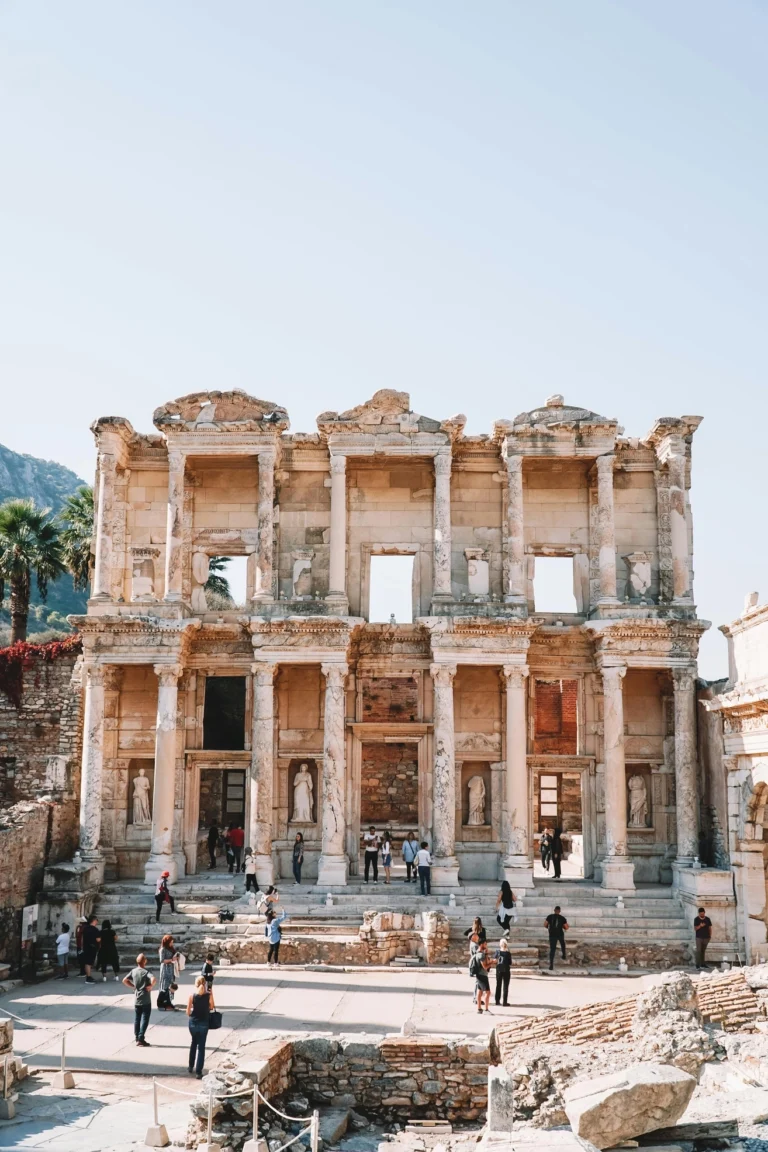
Ephesus and Pamukkale in One Trip: How to Plan It
A practical guide to visiting Ephesus and Pamukkale in one trip, including how many days you need, route order, overnight stays and one-day options.
Read more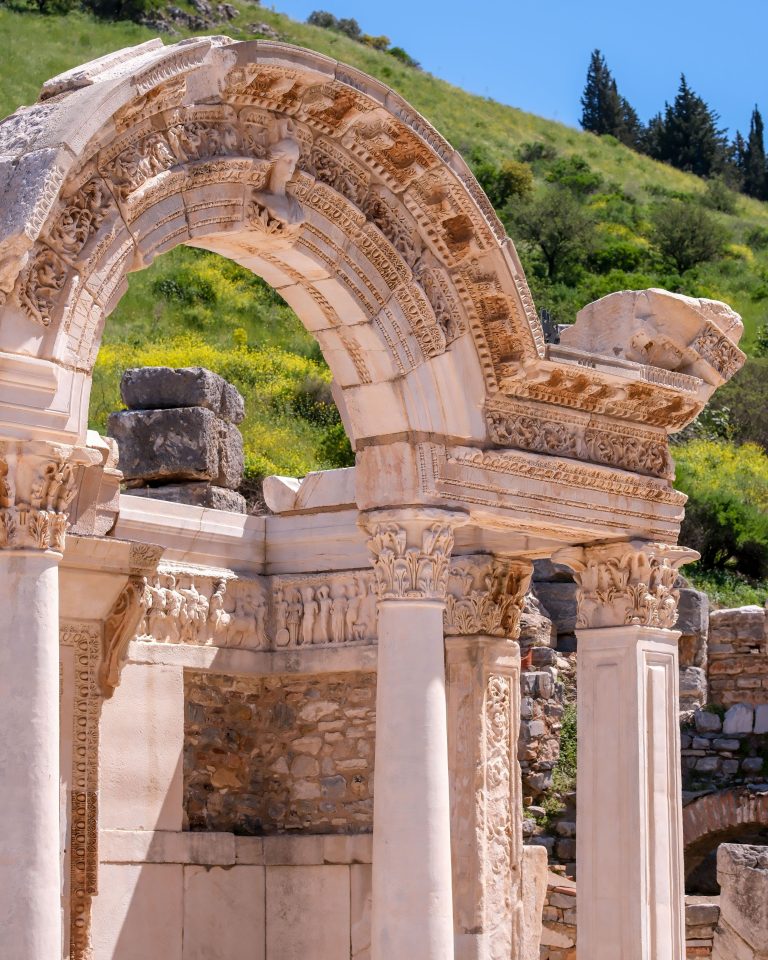
10 Days in Turkey Itinerary
Ten days in Turkey is a very good amount of time for a first trip. You still cannot see everything. Turkey is a large…
Read moreNext steps
Continue Planning Your Turkey Trip
Explore practical destination guides, airport routes, itineraries, and travel planning advice.