

This article may contain affiliate links. We may earn a commission if you book or purchase through them, at no extra cost to you.
Ephesus and Pamukkale are two of the most popular places to visit in western Turkey. Many first-time travelers want to include both in the same itinerary, and this can be a very good idea if the route is planned properly.
But there is one important point to understand from the beginning: Ephesus and Pamukkale should ideally be planned over at least two days. They are often mentioned together in Turkey itineraries, but they are not next to each other, and both places deserve proper time.
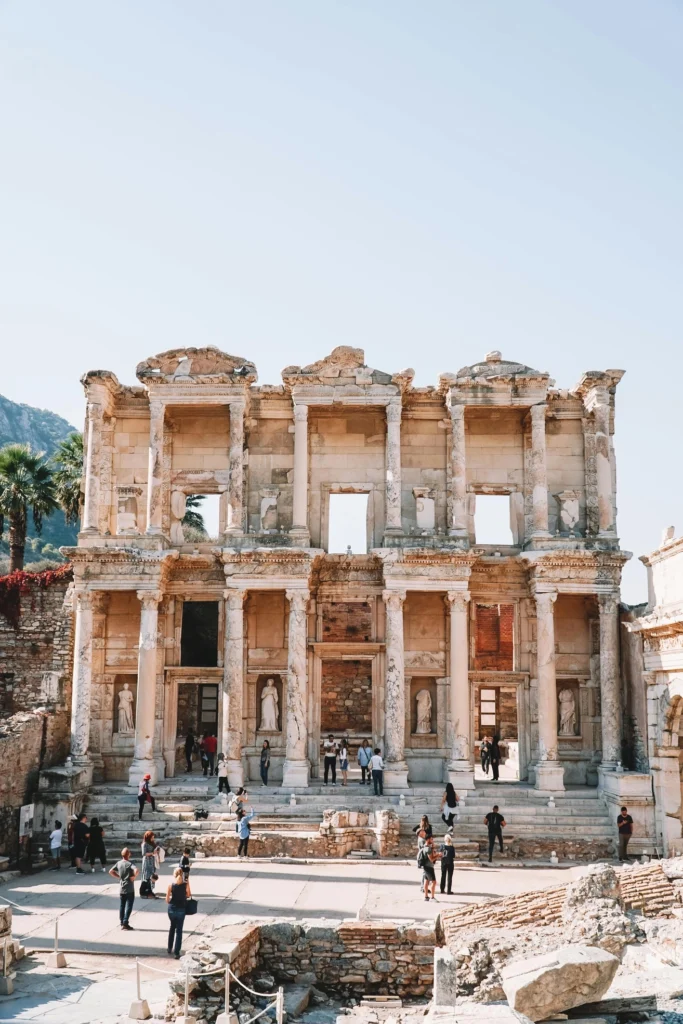
When travelers say “Ephesus,” they usually do not mean only Ephesus Ancient City. A proper Ephesus day may also include the House of the Virgin Mary, the Temple of Artemis, St. John Basilica, the Ephesus Museum, or Sirince, depending on the route and interests. This can easily become a full-day tour.
Pamukkale is similar. It is not only about taking photos on the white travertines. The visit usually includes both Pamukkale travertines and Hierapolis Ancient City, and you need time to walk, look around, and enjoy the site without rushing.
So yes, Ephesus and Pamukkale can work very well in one trip. But for most travelers, the best plan is not one long rushed day. It is one day for Ephesus and one day for Pamukkale.
Quick Answer: Can You Visit Ephesus and Pamukkale in One Trip?
Yes, you can visit Ephesus and Pamukkale in one trip. In fact, they are one of the most common combinations in western Turkey.
The best plan is to allow at least two days. One day can be used for Ephesus and the nearby sites around Selcuk, and the second day can be used for Pamukkale and Hierapolis.
If you absolutely have to visit both in one day, it may be possible with an early start and a very focused route. In that case, you should keep the plan simple: visit Ephesus Ancient City, then continue to Pamukkale and Hierapolis. But this will be a long and tiring day, and you will not have much time for extra stops.
Why Two Days Is Better
Two days give the route enough breathing space. Ephesus and Pamukkale are both important sites, but they offer very different experiences.
Ephesus is one of Turkey’s most impressive ancient cities. The Library of Celsus, the Great Theatre, Curetes Street, temples, fountains, and marble streets all need time. If you also want to visit the House of the Virgin Mary, the Temple of Artemis, St. John Basilica, or Sirince, the day becomes much fuller.
Pamukkale also needs time because the site is larger than many people expect. The white travertines are the famous part, but Hierapolis Ancient City is just as important to understand the place. You may want to walk around the ruins, see the theatre, and spend time around the terraces.
Trying to compress both places into one day usually means giving up the slower, better parts of the visit.
Best Route Order
The best route order depends on where you are coming from and where you are going next.
If you are flying into Izmir Airport, a practical route is usually:
Izmir Airport → Kusadasi or Selcuk → Ephesus → Pamukkale → onward travel
This route makes sense because Ephesus, Selcuk, and Kusadasi are south of Izmir Airport, and Pamukkale is farther inland. You avoid going into Izmir city unnecessarily and then coming back in the same direction again.
If you are already in Pamukkale or Denizli, you can do the route in reverse. Visit Pamukkale and Hierapolis first, then continue toward Selcuk, Kusadasi, and Ephesus.
There is no single correct direction. The main goal is to avoid unnecessary backtracking.
Suggested 2-Day Plan
A simple two-day plan works best for most travelers.
On the first day, visit Ephesus Ancient City and choose the nearby places that matter most to you. A classic full-day Ephesus plan may include Ephesus Ancient City, the House of the Virgin Mary and the Temple of Artemis. You can add St. John Basilica to your itinerary if you are on a private tour. Standart group tours do not visit St. John Basilica. If you enjoy a village atmosphere, Sirince can also be added, but you do not need to include everything.
On the second day, travel to Pamukkale and visit the travertines and Hierapolis Ancient City. If you have time and interest, you can also consider Cleopatra’s Pool, but it is optional. For many travelers, the travertines, Hierapolis, and the theatre are already enough for a strong visit.
This two-day structure gives both destinations proper attention without making the trip feel like a race.
Can You Visit Ephesus and Pamukkale in One Day?
Technically, yes. For some travelers, Ephesus and Pamukkale can be visited in one very long day, especially with private transport and an early start.
But I would only recommend this if you truly do not have another option.
If you try to do both in one day, keep the itinerary very focused. Visit Ephesus Ancient City first, then continue to Pamukkale and Hierapolis. Do not try to add the House of the Virgin Mary, Sirince, St. John Basilica, a long lunch, shopping stops, and extra photo stops on the same day.
A one-day plan can help you see both highlights, but it will be tiring. You will spend a lot of time on the road, and your time at each site will be limited. It can work as a practical solution, but it is not the best version of the experience.
Where Should You Stay?
For the Ephesus part of the route, the most practical bases are Selcuk and Kusadasi.
Selcuk is closest to Ephesus and works well if your main priority is history and easy logistics. Kusadasi is better if you want seaside hotels, restaurants, a more relaxed evening atmosphere, and more accommodation options.
You can stay in Pamukkale village, Karahayit, or Denizli if you are planning to visit Pamukkale. Pamukkale village keeps you close to the travertines. Karahayit is known for thermal hotels. Denizli can be useful for transport connections, but it feels more like a city base than a travel stop and adds extra cost.
A common plan is to stay around Kusadasi or Selcuk for Ephesus, then continue to Pamukkale the next day.
Should You Take a Tour or Travel Independently?
Both options can work, but the route needs planning.
You can travel independently if you are comfortable arranging transport, checking schedules, managing luggage, and organizing your own timing. This suits travelers who prefer flexibility and don’t mind handling the logistics themselves.
A guided tour or private arrangement can make the route easier, especially if you have limited time. This is particularly useful for Ephesus because the ancient city is much more meaningful with historical background. For Pamukkale, the main advantage is usually smoother transport and timing.
If you only have one day for both places, private transport or a very carefully planned tour becomes much more important.
What to Include at Ephesus
For a proper Ephesus day, start with Ephesus Ancient City. This is the main site and should not be rushed. The Library of Celsus, Great Theatre, Curetes Street, temples, baths, and marble streets are the heart of the visit.
If you have a full day in the area, the House of the Virgin Mary is one of the most popular nearby stops. The Temple of Artemis is usually a short visit, but it is historically important. St. John Basilica is also worth considering if you are interested in early Christian history.
The Terrace Houses are another excellent addition if you enjoy archaeology and Roman daily life. They usually require extra time and a separate ticket, so they are better when your day is not too rushed.
What to Include at Pamukkale
For Pamukkale, the main visit should include both the travertines and Hierapolis Ancient City.
The travertines are the famous white terraces. Visitors walk barefoot on the allowed sections to protect the surface. The ground can be slippery and uneven, so it is better to take your time.
Hierapolis is the ancient city above the terraces. The theatre is one of the highlights and is worth seeing if you have enough time and energy. You can also see ancient streets, baths, gates, tombs, and other ruins.
Cleopatra’s Pool is optional. Some visitors enjoy swimming there, while others prefer to focus on the terraces and ancient city.
Ayfer’s My Practical Advice
If you want to visit both Ephesus and Pamukkale, try to give the route at least two days. This is the easiest way to enjoy both places without turning the trip into a race.
If you are going back to Istanbul after 2 days, fly into Izmir and start in Ephesus. This way, you can fly from Denizli Airport to Istanbul directly.
Use one day for Ephesus and the nearby Selcuk sites, and one day for Pamukkale and Hierapolis. This gives you a much better balance between sightseeing and travel time.
If you have to do both in one day, keep it simple. Visit only Ephesus Ancient City, then Pamukkale and Hierapolis. Accept that it will be a long, tiring day and avoid extra stops.
The best plan is not the one with the longest list of places. It is the one that lets you see the main sites properly and continue your trip without feeling exhausted.
Ayfer’s Final Advice
Ephesus and Pamukkale are absolutely worth combining in one western Turkey route. They are different enough to make the trip interesting, and together they offer a strong mix of ancient history, natural beauty, archaeology, and classic Turkey sightseeing.
But they should not be treated as two quick stops on the same afternoon. For most first-time visitors, the best plan is simple: spend one day around Ephesus, spend one day around Pamukkale, and avoid unnecessary backtracking.
If your time is very limited, a one-day version can be done, but it should be planned carefully and kept focused. Otherwise, two days will almost always give you a better experience.
FAQ About Visiting Ephesus and Pamukkale in One Trip
Can you visit Ephesus and Pamukkale in one trip?
Yes. Ephesus and Pamukkale are commonly visited together in western Turkey. The route works best with at least two days.
How many days do you need for Ephesus and Pamukkale?
You need at least two days for a comfortable visit. One day is possible only with a very early start and a focused route, but it will be long and tiring.
Can you visit Ephesus and Pamukkale in one day?
Yes, but it is not ideal. If you must do it in one day, focus only on Ephesus Ancient City, Pamukkale travertines, and Hierapolis Ancient City.
Should I visit Ephesus or Pamukkale first?
Either direction can work. If you arrive through Izmir Airport, it often makes sense to visit Ephesus first, then continue to Pamukkale. If you have a flight from Izmir Airport to Cappadocia, you can start from Pamukkale. If you are traveling to Antalya later, start from Ephesus and travel to Antalya from Pamukkale. It is only a 3.5-hour drive from Pamukkale to Antalya.
Where should I stay for Ephesus and Pamukkale?
For Ephesus, Selcuk or Kusadasi are the most practical bases. For Pamukkale, you can stay in Pamukkale village, Karahayit, or Denizli.
Is Pamukkale close to Ephesus?
Pamukkale and Ephesus are on the same wider western Turkey route, but they are not next to each other. Plan for proper travel time between them. It is about a 3-hour drive between Pamukkale and Ephesus.
Is it better to stay in Izmir for Ephesus and Pamukkale?
Usually not, unless you specifically want to visit Izmir. Kusadasi or Selcuk is usually more practical for Ephesus, and then you can continue toward Pamukkale.
Is a guided tour worth it for Ephesus and Pamukkale?
A guided or private arrangement can be useful if you have limited time or want easier logistics. A guide is especially helpful at Ephesus because the site is large and historically rich.
Related guides
Related Guides

Izmir Airport to Selcuk: Train, Transfer or Taxi?
Find the easiest way to travel from Izmir Airport to Selcuk by transfer, train or taxi.
Read more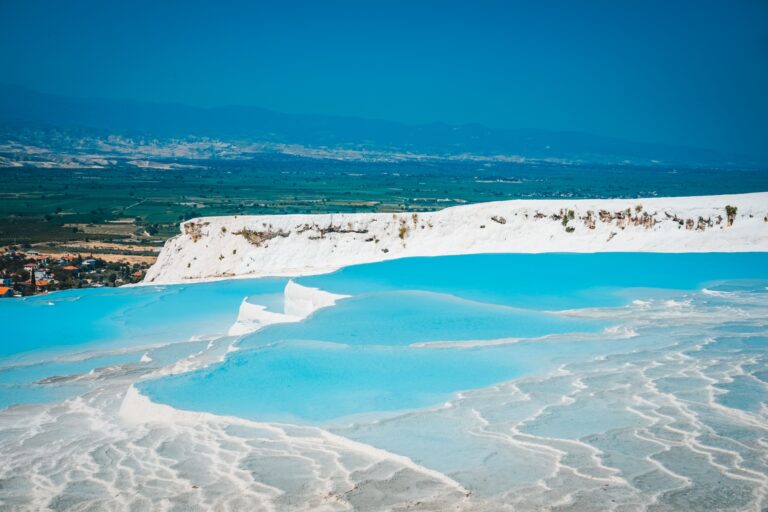
Is Pamukkale Worth Visiting? A Practical Guide for First-Time Visitors
A practical guide to deciding whether Pamukkale is worth visiting, with advice on the travertines, Hierapolis, crowds, timing and route planning.
Read more
10 Days in Turkey Itinerary
Ten days in Turkey is a very good amount of time for a first trip. You still cannot see everything. Turkey is a large…
Read moreNext steps
Continue Planning Your Turkey Trip
Explore practical destination guides, airport routes, itineraries, and travel planning advice.